
Organic Vanilla: Understanding Labels and Benefits
Share
What is organic vanilla, and why choose this label?
Organic vanilla represents far more than a simple certification. It is a mark of authenticity that guarantees cultivation that respects the environment and centuries-old traditions. Unlike conventional methods, organic vanilla completely excludes the use of synthetic pesticides, chemical herbicides, and artificial fertilizers.
This natural approach not only preserves plantation biodiversity, but also allows vanilla vines to develop their full aromatic potential. Pods from organic farming reveal more complex aromatic nuances and remarkable flavor intensity.
"Organic vanilla embodies the very essence of what an exceptional ingredient should be: pure, authentic, and respectful of its native terroir."
Organic vanilla producers favor ancestral methods passed down from generation to generation. This artisanal approach guarantees superior quality while preserving the fragile ecosystems of Madagascar, the main producing region of Bourbon vanilla.
The different organic certification labels
The French AB label and its requirements
The French Organic Agriculture label imposes strict criteria for vanilla production. Vanilla vines must undergo a conversion period of at least three years before obtaining certification. During this transition, no synthetic chemical products may be used.
Checks are carried out at every stage: from cultivation to final packaging. This rigorous traceability ensures consumers impeccable quality and complete transparency about production methods.
European and international certification
At the European level, the EU organic logo complements national certifications. This harmonized framework facilitates trade while maintaining high standards. For imported vanilla, such as that from Madagascar, approved certification bodies verify compliance with European standards.
Other international certifications, such as USDA Organic or JAS Organic, broaden export opportunities for environmentally responsible producers. These multiple labels reflect the quality commitment of serious producers.
Fair trade and sustainable labels
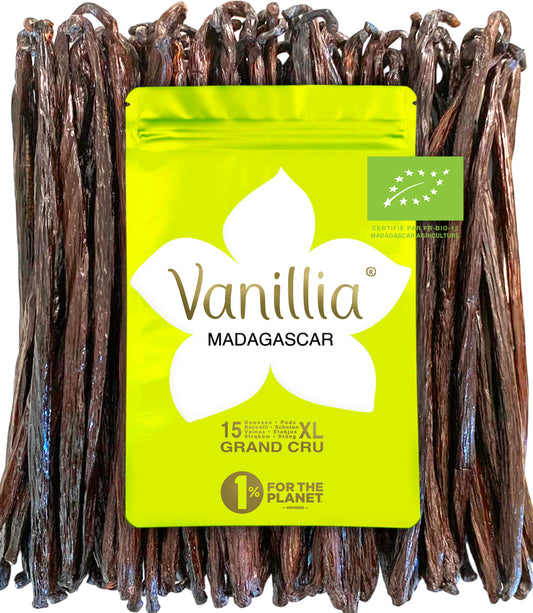
Some producers combine organic certification and fair trade. This dual approach guarantees not only environmentally respectful farming methods, but also fair pay for local producers. Reforestation initiatives, such as donating 1% of sales to replant trees, are part of this broader approach.
The nutritional and aromatic benefits of organic vanilla
Chemical composition and active compounds
Vanillin is the main aromatic compound in vanilla, accounting for about 2% of the total weight of a quality pod. But its olfactory richness comes from more than 250 different volatile compounds that interact harmoniously.
Organic pods have higher concentrations of natural vanillin and secondary compounds such as vanillic acid, p-hydroxybenzaldehyde, and eugenol. This molecular complexity explains the superior flavor of organic vanilla.
| Aromatic compound | Conventional vanilla | Organic vanilla |
|---|---|---|
| Natural vanillin | 1,5-2,0% | 2,0-2,5% |
| Vanillic acid | 0,1-0,2% | 0,2-0,3% |
| Phenolic compounds | Traces | Significant presence |
Antioxidant properties and health benefits
Organic vanilla is full of natural antioxidants that protect the body against oxidative stress. The polyphenols present in the pods have a protective effect on cells and help slow aging.
The anti-inflammatory properties of vanilla are particularly interesting. Some studies also suggest beneficial effects on blood sugar regulation and stimulation of the immune system.
Quality criteria for choosing your organic vanilla
Visual appearance and physical characteristics
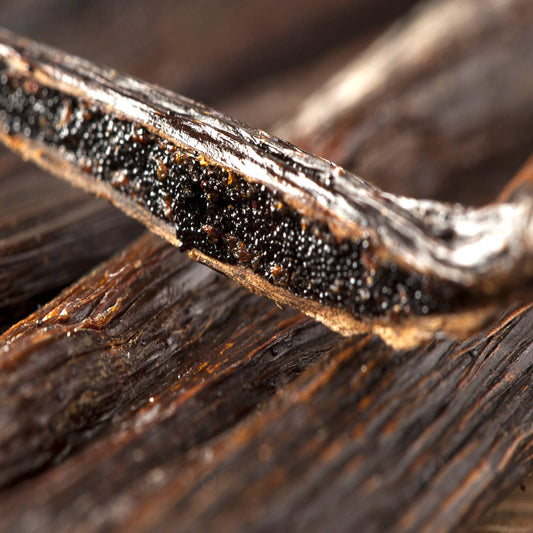
A high-quality organic vanilla pod has a uniform chocolate-brown color with slightly glossy highlights. Its texture should be supple and oily to the touch, a sign of optimal curing and an ideal moisture content of around 30%.
Premium pods generally measure between 16 and 20 centimeters in length. Their surface may show fine white crystallizations called "vanilla frost" - pure vanillin that crystallizes naturally. Far from being a defect, this bloom reflects an exceptional concentration of aromatic compounds.
Olfactory and flavor profile
Sensory evaluation is the ultimate quality criterion. An exceptional organic vanilla reveals a complex bouquet combining sweet, balsamic, and sometimes smoky notes depending on its terroir of origin. The nuances may evoke chocolate, dried fruit, or even subtle floral touches.
In terms of taste, organic vanilla reveals a rounded mouthfeel with remarkable aromatic persistence. This flavor intensity comes directly from respectful growing methods that allow the plant to express its full genetic potential.
Traceability and geographic origin
The geographic origin considerably influences the aromatic profile. Madagascar Bourbon vanilla, grown according to traditional organic methods, develops unique organoleptic characteristics thanks to its humid tropical climate and rich volcanic soils.
Transparent traceability must make it possible to identify the production region precisely, or even the plantation of origin. This information guarantees the product's authenticity and makes it possible to appreciate the terroir nuances that give each harvest its richness.
Optimal use of organic vanilla in pastry
Aroma extraction techniques
To fully reveal the aromas of organic vanilla, several techniques are available to demanding pastry chefs. Hot infusion in a fatty liquid such as cream or butter allows optimal extraction of fat-soluble compounds. The temperature should never exceed 80°C in order to preserve the volatile aromatic molecules.
The technique of scraping the seeds with a knife makes it possible to incorporate the vanilla caviar directly into preparations. The emptied pods retain a large part of their aromas and can be reused to flavor sugar, rum, or other liquid bases.
Flavor pairings and innovative creations
Organic vanilla pairs perfectly with many premium ingredients. Classic combinations with dark chocolate, red berries, or citrus fruits take on a new dimension thanks to the aromatic complexity of organic vanilla.
- Pairing with Eastern spices such as cardamom or saffron
- Combination with exotic fruits for tropical desserts
- Pairing with aged spirits for sophisticated creations
- Use in savory preparations to surprise the palate
Environmental and ethical impact of choosing organic
Choosing organic vanilla goes far beyond a simple taste criterion. This conscious approach directly contributes to preserving Madagascar's ecosystems and maintaining local biodiversity. Organic plantations encourage coexistence with wildlife and preserve soil quality for future generations.
The social aspect is also of vital importance. Producers committed to organic farming often benefit from sustainable development programs that include training, modern equipment, and fair pay. Some companies even donate part of their profits to fund reforestation projects.
This comprehensive approach transforms every purchase of organic vanilla into a civic act. In this way, informed consumers play a concrete part in building a supply chain that is more respectful of the environment and producer communities.